Blog

  • Premature Ejaculation

    Premature Ejaculation

    WHAT IS PREMATURE EJACULATION?

    Premature ejaculation is not an uncommon condition for men to experience at some point in their life. It refers to instances where a man comes to climax “too early some or most of the time” when they engage in sexual intercourse. However, the definition of what constitutes “too early” can change from individual to individual, though most professionals define premature ejaculation as when a man ejaculates after less than two minutes of being aroused.

    Premature ejaculation can occur during all forms of sexual activity, including vaginal sex, anal sex, oral sex, masturbation and simple physical contact.

    WHAT ARE THE DIFFERENCES BETWEEN PREMATURE EJACULATION AND ERECTILE DYSFUNCTION?

    Erectile dysfunction and premature ejaculation are often associated with one another, and can even be confused for each other, as they are both male sexual health conditions that relate to sexual activity and the male erection.

    However, it is important to differentiate between the two conditions in order to select the most appropriate treatment. The main difference between the two conditions is that premature ejaculation is ejaculating too quickly, whilst erectile dysfunction (otherwise known as impotence) is an inability to achieve or maintain an erection.

    If you still aren’t sure which condition you’re suffering from, speak to one of the Express Pharmacy team today using our discreet Live Chat service or by calling 0208 123 0703.

    WHAT ARE THE SYMPTOMS OF PREMATURE EJACULATION?

    It is currently difficult to gain a clear diagnosis of premature ejaculation, as the guidelines for what the specific symptoms of the condition are is often changing. This is largely due to the fact that all men have a different idea regarding how long sexual intercourse should last, so one man’s concerns may be non-existent in another man who ejaculates after the same period of time.

    There has been no specific length established for how long sexual intercourse should last. However, studies into the conditions have set certain guidelines which allow us to establish two main symptoms of premature ejaculation. These include:

    • Reaching the point of ejaculation within two minutes (120 seconds) or less of becoming aroused
    • This problem occurring regularly. Most men will experience “one off” or intermittent instances of premature ejaculation at some point in their life.

    The regular experience of reaching ejaculation within two minutes is the surest sign that you may potentially be suffering with premature ejaculation. However, it is still beneficial to discuss your symptoms with a medical professional in order to gain a clear diagnosis.

    The embarrassment associated with premature ejaculation is common but often misplaced. Infrequent or intermittent premature ejaculation can be embarrassing and inconvenient, but it does not necessarily indicate a sexual dysfunction. Perhaps the surest sign of persistent premature ejaculation is where a man finds that the problem does not ease even when they have become comfortable with their sexual partner.

    WHAT ARE THE CAUSES OF PREMATURE EJACULATION?

    There are many factors which can be at the root of premature ejaculation, which is why so many men experience the condition. These causes can be both physical and psychological, or it can be brought on by lifestyle factors too.

    Physical causes of premature ejaculation include:

    • Spinal injuries
    • Diabetes
    • Vascular conditions
    • Prostate disease
    • High blood pressure
    • Multiple sclerosis
    • Neurological conditions

    Psychological causes of premature ejaculation include:

    • Stress
    • Anxiety
    • Guilt
    • Nervousness
    • A lack of confidence
    • Unresolved emotional issues
    • Sexual inexperience

    Lifestyle factors which can contribute to premature ejaculation include:

    • Excessive alcohol consumption
    • Drug use
    • Nicotine

    HOW TO TREAT PREMATURE EJACULATION

    The first step to resolving your premature ejaculation is to understand what is causing the condition. This will give you a clue as to what method of treatment will benefit you. For example, if your premature ejaculation is simply due to nervousness, this will likely get better as you become more sexually confident.

    Lifestyle changes can help reduce symptoms of premature ejaculation if the condition is indeed caused by lifestyle choices like drinking and drug use, whilst therapy or opening up to a partner can help alleviate premature ejaculation caused by psychological concerns. If the condition is caused by an underlying physical issue, treating this concern can help alleviate your premature ejaculation.

    Prescription medication is an effective method of premature ejaculation relief, particularly SSRIs (Selective Serotonin Reuptake Inhibitors). Premature ejaculation medication such as Priligy uses the active ingredient Dapoxetine to encourage ejaculation delay during sexual intercourse.

  • Pregnancy

    Pregnancy

    A Guide to Pregnancy

    During pregnancy it’s completely normal to have many questions and concerns. Your local pharmacy is a great place to go for support during your pregnancy (and beyond), they’ll help you you make the right choices when it comes to looking after your and your baby’s health.

    This is a very important stage on your life and it is normal to ask yourself a lot of questions and have many concerns. Do not worry, A pharmacist can support your way during pregnancy and beyond, making sure you make the right choices and helps you looking after your health and your baby.

    Healthy eating

    A healthy diet is a vital part of a healthy lifestyle at any time, but is especially important if you’re pregnant or planning a pregnancy. Eating healthily during pregnancy will help your baby to develop and grow.

    You don’t need to go on a special diet, but it’s important to eat a variety of different foods every day to get the right balance of nutrients that you and your baby need.

    It’s always best to get vitamins and minerals from the foods you eat, but when you’re pregnant you need to take a folic acid supplement as well during the first few months, to make sure you get everything you and your baby may need.

    There are also certain foods that should be avoided in pregnancy.

    You will probably find that you are hungrier than usual, but you don’t need to “eat for two” – even if you are expecting twins or triplets. This is one of the most common myths of pregnancy.

    EXERCISE IN PREGNANCY

    The more active and fit you are during pregnancy, the easier it will be for you to adapt to your changing shape and weight gain. It will also help you with labour and get back into shape after the birth of your baby.

    Keep up your normal daily physical activity or exercise (sport, running, yoga, dancing, or even walking to the shops and back) for as long as you feel comfortable.

    Exercise is not dangerous for your baby but there are certain exercises that should be avoided, so it is always worth to check with your Doctor or pharmacist.

    Postnatal depression

    Postnatal depression is a type of depression that many parents experience after having a baby.  t’s a common problem, affecting more than 1 in every 10 women within a year of giving birth. It can also affect fathers and partners, although this is less common.

    It’s important to seek help as soon as possible if you think you might be depressed, as your symptoms could last months or get worse and have a significant impact on you, your baby and your family.

    It is difficult to understand if you are depressed as many women feel a bit down, tearful or anxious in the first week after giving birth. This is often called the “baby blues” and is so common that it’s considered normal as you need to adjust to your new situation and sometimes it can be challenging. The “baby blues” don’t last for more than two weeks after giving birth.

    If your symptoms last longer or start later, you could have postnatal depressionPostnatal depression can start any time in the first year after giving birth.

    How can we help you?

    Request a one to one consultation with one of our pharmacist who can answer your questions and give you advice about.

    • Healthy eating in pregnancy
    • Exercise in pregnancy
    • Medicines in pregnancy. What can you take to ease your symptoms and which medicines you need to avoid.
    • Post-natal depression
  • Piles (Haemorrhoids)

    Piles (Haemorrhoids)

    Piles (haemorrhoids) are lumps inside and around your bottom (anus). They often get better on their own after a few days. There are things you can do to treat and prevent piles.

    Check if it’s piles

    Symptoms of piles include:

    • bright red blood after you poo
    • an itchy anus
    • feeling like you still need to poo after going to the toilet
    • slimy mucus in your underwear or on toilet paper after wiping your bottom
    • lumps around your anus
    • pain around your anus

    How you can treat or prevent piles

    Do

    • drink lots of fluid and eat plenty of fibre to keep your poo soft
    • wipe your bottom with damp toilet paper
    • take paracetamol if piles hurt
    • take a warm bath to ease itching and pain
    • use an ice pack wrapped in a towel to ease discomfort
    • gently push a pile back inside
    • keep your bottom clean and dry
    • exercise regularly
    • cut down on alcohol and caffeine (like tea, coffee and cola) to avoid constipation

    Don’t

    • do not wipe your bottom too hard after you poo
    • do not ignore the urge to poo
    • do not push too hard when pooing
    • do not take painkillers that contain codeine, as they cause constipation
    • do not take ibuprofen if your piles are bleeding
    • do not spend more time than you need to on the toilet

    Ask a pharmacist about treatment for piles

    A pharmacist can suggest:

    • creams to ease the pain, itching and swelling
    • treatment to help constipation and soften poo
    • cold packs to ease discomfort

    Many pharmacies have private areas if you do not want to be overheard.

    See a GP if:

    • there’s no improvement after 7 days of treatment at home
    • you keep getting piles

    Your GP may prescribe stronger medicines for haemorrhoids or constipation.

    Ask for an urgent GP appointment or call 111 if:

    • you have piles and your temperature is very high or you feel hot and shivery and generally unwell
    • you have pus leaking from your piles

    Hospital treatment for piles

    If there’s no improvement to your piles after home treatments, you may need hospital treatment.

    Talk to your doctor about the best treatment for you. Treatment does not always prevent piles coming back.

    Treatment without surgery

    Common hospital treatments include:

    • rubber band ligation: a band is placed around your piles to make them drop off
    • sclerotherapy: a liquid is injected into your piles to make them shrink
    • electrotherapy: a gentle electric current is applied to your piles to make them shrink
    • infrared coagulation: an infrared light is used to cut the blood supply to your piles to make them shrink

    You’ll be awake for this type of treatment, but the area will be numbed.

    You should be able to go home on the same day.

    If these treatments do not work, you may need surgery to remove your piles.

    Surgery

    Surgical treatments include:

    • haemorrhoidectomy: your piles are cut out
    • stapled haemorrhoidopexy: your piles are stapled back inside your anus
    • haemorrhoidal artery ligation: stitches are used to cut the blood supply to your piles to make them shrink

    You’ll usually need to be asleep for this type of treatment and may need to stay in hospital for more than 1 day.

    If Immediate action required, go to A&E or call 999 if you have piles and:

    • you’re bleeding non-stop
    • there’s a lot of blood – for example, the toilet water turns red or you see large blood clots
    • you’re in severe pain

    What causes piles?

    Piles are swollen blood vessels. It’s not clear what causes them.

    Things that make piles more likely:

    • constipation
    • pushing too hard when pooping
    • pregnancy
    • heavy lifting
  • Period Pain

    Period Pain

    Period pain is common and a normal part of your menstrual cycle. Most women get it at some point in their lives.

    It’s usually felt as painful muscle cramps in the tummy, which can spread to the back and thighs.

    The pain sometimes comes in intense spasms, while at other times it may be dull but more constant.

    It may also vary with each period. Some periods may cause little or no discomfort, while others may be more painful.

    Sometimes you may get pelvic pain even when you do not have your period.

    What causes period pain?

    Period pain happens when the muscular wall of the womb tightens (contracts). Mild contractions continually occur in your womb, but they’re usually so mild that most women cannot feel them.

    During your period, the wall of the womb starts to contract more vigorously to help the womb lining shed as part of your period.

    When the wall of the womb contracts, it compresses the blood vessels lining your womb. This temporarily cuts off the blood supply – and oxygen supply – to your womb. Without oxygen, the tissues in your womb release chemicals that trigger pain.

    While your body is releasing these pain-triggering chemicals, it’s also producing other chemicals called prostaglandins. These encourage the womb muscles to contract more, further increasing the level of pain.

    It’s not known why some women have more period pain than others. It may be that some women have a build-up of prostaglandins, which means they experience stronger contractions.

    Period pain caused by a medical condition

    Less commonly, period pain can be caused by an underlying medical condition.

    Period pain linked to an underlying medical condition tends to affect older women. Women aged 30 to 45 are most commonly affected.

    Medical conditions that can cause period pain include:

    • endometriosis – where cells that normally line the womb grow in other places, such as in the fallopian tubes and ovaries; these cells can cause intense pain when they shed
    • fibroids – non-cancerous tumours that can grow in or around the womb and can make your periods heavy and painful
    • pelvic inflammatory disease – where your womb, fallopian tubes and ovaries become infected with bacteria, causing them to become severely inflamed
    • adenomyosis – where the tissue that normally lines the womb starts to grow within the muscular womb wall, making your periods particularly painful

    Period pain caused by contraceptive devices

    An intrauterine device (IUD) is a type of contraception made from copper and plastic that fits inside the womb. It can also sometimes cause period pain, particularly during the first few months after it’s inserted.

    You may notice a change in your normal pattern of pain if your period pain is linked to a medical condition or a contraceptive IUD. For example, the pain may be more severe or it may last much longer than normal.

    You may also have:

    • irregular periods 
    • bleeding in between periods
    • a thick or foul-smelling vaginal discharge
    • pain during sex

    See your GP if you have any of these symptoms as well as period pain.

    How long will my period pain last?

    Period pain usually starts when your bleeding begins, although some women have pain several days before the start of their period.

    The pain usually lasts 48 to 72 hours, although it can last longer. It’s usually at its worst when your bleeding is heaviest.

    Young girls often have period pain when they begin getting periods. Read more about starting periods.

    Period pain that does not have an underlying cause tends to improve as a woman gets older. Many women also notice an improvement after they’ve had children.

    How can I treat period pain?

    In most cases period pain is mild enough to treat at home.

    Painkillers

    You can take ibuprofen and aspirin to help manage your pain.

    However, do not take ibuprofen or aspirin if you have asthma or stomach, kidney or liver problems. Aspirin should not be taken by anyone under 16 years of age.

    You could also try paracetamol, but studies have shown that it does not reduce pain as well as ibuprofen or aspirin.

    If ordinary painkillers do not help, your GP may prescribe a stronger painkiller, such as naproxen or codeine.

    Other self-help measures to try

    You could also try:

    • stopping smoking – smoking is thought to increase the risk of period pain
    • exercise – you may not feel like exercising during a painful period, but being active may reduce pain; try some gentle swimming, walking or cycling
    • heat – putting a heat pad or hot water bottle (wrapped in a tea towel) on your tummy may help reduce pain
    • warm bath or shower – taking a warm bath or shower can relieve pain and help you relax
    • massage – light, circular massage around your lower abdomen may also help reduce pain
    • relaxation techniques – relaxing activities, such as yoga or pilates, may help distract you from feelings of pain and discomfort
    • transcutaneous electronic nerve stimulation (TENS) – a small battery-operated device that delivers a mild electrical current to your tummy to help reduce pain

    When should I see my GP?

    See your GP if you have severe period pain or your normal pattern of periods changes – for example, if your periods become heavier than usual or irregular.

    Contraceptives that can help period pain

    Your GP may give you the contraceptive pill. This can ease period pain because it thins the womb lining and reduces the amount of prostaglandin your body releases.

    A thinner womb lining means the muscles of the womb do not have to contract as much when it sheds. Your period will also be lighter.

    If the contraceptive pill is not suitable for you, the contraceptive implant or the contraceptive injection are good alternatives.

    The Mirena intrauterine system (IUS) can also sometimes help with painful periods.

    Having a pelvic examination

    Your GP may want to carry out a pelvic examination to help diagnose or rule out other causes of your period pain.

    They’ll insert gloved, lubricated fingers into your vagina to feel for any abnormalities in your womb or ovaries.

    The examination won’t be carried out without your permission. You can also ask to have a female doctor, choose to have a friend or relative present, or a practice nurse to act as a chaperone.

    In some cases your GP may also order a pelvic ultrasound, which may show any abnormalities.

    Referral to a specialist

    If your period pain has not been controlled after 3 months of treatment with painkillers or a suitable hormonal contraceptive, your GP may refer you to a specialist, which will usually be a gynaecologist.

    This is for further tests to rule out an underlying medical condition.

    Further tests

    To help find out the cause of your period pain, a gynaecologist may need to carry out:

    • a urine or blood test
    • pelvic ultrasound )– where high-frequency sound waves are used to produce an image of the inside of your body; it’s painless and will show any abnormalities in your reproductive organs
    • laparoscopy – under general anaesthetic, a small cut is made in your abdomen through which a fibro-optic telescope is inserted; it can be used to look at your internal organs, as well as take samples of tissue (a biopsy)
    • hysteroscopy – allows the inside of the womb to be examined using a fibro-optic telescope; it’s passed through your vagina and into the womb to check for abnormalities

    Treating an underlying medical condition

    If your period pain is caused by an underlying medical condition, your treatment will depend on which condition you have.

    For example, pelvic inflammatory disease (PID) may require antibiotics to treat the infection, while fibroids may need to be surgically removed.

    Can period pain affect fertility?

    Period pain that’s part of your normal menstrual cycle will not affect your fertility. However, if the cause is a medical condition, this may affect your fertility.

    For example, endometriosis and pelvic inflammatory disease can cause scarring and a build-up of tissue in your fallopian tubes, making it harder for sperm to reach and fertilise an egg.


    Period pain is a normal part of a women’s menstrual cycle. It is often felt as painful muscle cramps in the lower abdomen which can spread to the back. The pain is caused by the muscles in the womb tightening, which compresses the lining of your womb; temporarily cutting off the blood supply, triggering pain in the abdominal area.

    The most common symptom suffered by women are lower stomach cramps and pain. These can be experiences as a constant pain or intense spasms. However, these symptoms may vary each month, affecting different parts of the body including thighs, lower back and hips. However, the associated symptoms may also be headaches.

    Mefenamic Acid can be used to treat period pain by reducing inflammation and provides an effective pain relief.

    It is advised not to take Mefenamic acid if you smoke or drink, and are taking other NSAIDs at the same time, such as Ibuprofen. Furthermore, long-term use of Mefenamic acid is not recommended as it may increase the risk of its side effects. One tablet is to be taken three times a day, for a maximum of three days. If your symptoms do not improve, please seek further advice from a doctor or healthcare professional.

  • Osteoporosis

    Osteoporosis

    Treating osteoporosis involves treating and preventing fractures, and using medicines to strengthen bones.

    Although a diagnosis of osteoporosis is based on the results of your bone density scan, the decision about what treatment you need, if any, is based on a number of other factors including your:

    • age
    • sex
    • risk of breaking a bone
    • previous injury history

    If you’ve been diagnosed with osteoporosis because you’ve had a broken bone, you should still receive treatment to try to reduce your risk of further broken bones.

    You may not need or want to take medicine to treat osteoporosis.

    However, make sure you’re getting enough calcium and vitamin D.

    To achieve this, your healthcare team will ask you about your diet and may recommend that you make changes or take supplements.

    Medicines for osteoporosis

    A number of different medicines are used to treat osteoporosis (and sometimes osteopenia).

    Bisphosphonates

    Bisphosphonates slow the rate that bone is broken down in your body. This maintains bone density and reduces your risk of a broken bone.

    There are a number of different bisphosphonates, including:

    • alendronic acid
    • ibandronic acid
    • risedronic acid
    • zoledronic acid

    They’re given as a tablet or injection.

    Always take bisphosphonates on an empty stomach with a full glass of water. Stand or sit upright for 30 minutes after taking them. You’ll also need to wait between 30 minutes and 2 hours before eating food or drinking any other fluids.

    Bisphosphonates usually take 6 to 12 months to work, and you may need to take them for 5 years or longer.

    You may also be prescribed calcium and vitamin D supplements to take at a different time to the bisphosphonate.

    The main side effects associated with bisphosphonates include:

    • irritation to the foodpipe
    • swallowing problems
    • stomach pain

    Osteonecrosis of the jaw is a rare side effect linked with the use of bisphosphonates, although most frequently with high-dose intravenous bisphosphonate treatment for cancer and not for osteoporosis.

    In osteonecrosis, the cells in the jaw bone die, which can lead to problems with healing. If you have a history of dental problems, you may need a check-up before you start treatment with bisphosphonates. Speak to your doctor if you have any concerns.

    Read more about bisphosphonates for treating osteoporosis.

    Selective oestrogen receptor modulators (SERMs)

    SERMs are medicines that have a similar effect on bone as the hormone oestrogen. They help to maintain bone density and reduce the risk of fracture, particularly of the spine.

    Raloxifene is the only type of SERM available for treating osteoporosis. It’s taken as a daily tablet.

    Side effects associated with raloxifene include:

    • hot flushes
    • leg cramps
    • a potential increased risk of blood clots

    Read more about raloxifene for treating osteoporosis.

    Parathyroid hormone

    Parathyroid hormone is produced naturally in the body. It regulates the amount of calcium in bone.

    Parathyroid hormone treatments (such as teriparatide) are used to stimulate cells that create new bone. They’re given by injection.

    While other medicines can only slow down the rate of bone thinning, parathyroid hormone can increase bone density. However, it’s only used in a small number of people whose bone density is very low and when other treatments are not working.

    Nausea and vomiting are common side effects of the treatment.

    Read more about teriparatide for treating osteoporosis.

    Calcium and vitamin D supplements

    Calcium is the main mineral found in bone, and having enough calcium as part of a healthy, balanced diet is important for maintaining healthy bones.

    For most healthy adults, the recommended amount of calcium is 700 milligrams (mg) of calcium a day, which most people should be able to get from a varied diet that contains good sources of calcium.

    However, if you have osteoporosis, you may need more calcium, usually as supplements. Ask your GP for advice about taking calcium supplements.

    Vitamin D helps the body absorb calcium. All adults should have 10 micrograms of vitamin D a day.

    From about late March/early April to the end of September, most people should be able to get all the vitamin D they need from sunlight on their skin.

    But since it’s difficult to get enough vitamin D from food alone, everyone (including pregnant and breastfeeding women) should consider taking a daily supplement containing 10 micrograms of vitamin D during the autumn and winter.

    For more information, read about who should take vitamin D supplements.

    HRT (hormone replacement therapy)

    HRT is sometimes taken by women who are going through the menopause, as it can help control symptoms.

    HRT has also been shown to keep bones strong and reduce the risk of breaking a bone during treatment.

    However, HRT is not specifically recommended for treating osteoporosis and is rarely used for this purpose.

    This is because HRT slightly increases the risk of developing certain conditions – such as breast cancer, endometrial cancer, ovarian cancer, stroke and venous thromboembolism – more than it lowers the risk of osteoporosis.

    Discuss the benefits and risks of HRT with your GP.

    Read more about the risks of HRT.

    Testosterone treatment

    In men, testosterone treatment can be useful when osteoporosis is caused by low levels of male sex hormones.

    Treating a broken bone caused by osteoporosis

    The Strong Bones After 50 patient booklet from the Royal College of Physicians has advice for people who have broken a bone after a fall, and their families and carers.

    It explains what a fragility fracture is, and what type of treatment you can expect.

  • NHS Unwanted Medicine Disposal Service

    NHS Unwanted Medicine Disposal Service

    If you have out of date or unwanted medicines, both prescription or over the counter drugs, don’t bin them or flush them.

    You can take your unwanted or out of date medicines back to your pharmacy for safe disposal, and it’s completely FREE.

    Each year enormous quantities of unused and expired medications are dumped into bins or flushed down toilets and sinks. The effects on the environment and human health are unclear but evidence is pointing to the presence of chemicals from prescriptions and over-the-counter medications in soil, drinking water and the surrounding environment. Just as proper medication administration is important, so is safe and cautious disposal.

    Unused prescription medicines cost the NHS across the UK over £300 million every year.

    Based on average costs, £300 million could pay for:

    • 80,906 MORE hip replacements
    • 101,351 MORE knee replacements
    • 19,799 MORE drug treatment courses for breast cancer
    • 11,778 MORE community nurses
    • 300,000 MORE drug treatment courses for Alzheimer’s

    You can help by only ordering the medicines that you need:

    • Please let your GP or Pharmacist know if you’ve stopped taking any of your medicines
    • Check what medicines you still have at home before re-ordering
    • Discuss your medication with your GP or Pharmacist on a regular basis
    • Think carefully before ticking all the boxes on your repeat prescription forms and only tick those you really need
    • If you don’t need the medicine please don’t order it! If you need the medicine in the future you can still request it.
    • If you need to go into hospital, please remember to take all your medicines with you in a clearly marked bag.
    • Please also remember that your medicines are prescribed only for you; it’s not safe to share them with anyone else.

    Remember that unused medicines cannot be recycled

    • Even if you never open them, once medicines have left the Pharmacy, they cannot be recycled or used by anyone else.
    • Please bring your unused medicines to the Pharmacy for safe disposal.
    • NEVER dispose of your unused or unwanted medicines down the toilet

    Unused medicines are a safety risk

    • Return out of date medicines to your pharmacy or dispensary for safe disposal
    • If your medicines change – return your old medicines to the pharmacy for safe disposal to avoid mixing them up with your new medicines
    • Don’t stockpile medication – it is a safety risk for children and others who might take them
    • Store medicines in an appropriate place out of reach of children

    For more information on Medicines Waste please visit http://www.medicinewaste.com/

  • NHS Repeat Prescriptions

    NHS Repeat Prescriptions

    To order your Repeat Prescription:

    • Telephone us on 0207 834 4721 during opening hours
    • Register an online patient account with us and log into your account to place an repeat prescription order using the order prescription section.

    Important Notes

    We strongly recommend you request your repeat prescription a minimum of 5 working days before you run out of your medication.

    If you have less than 2 days supply, please contact your surgery directly and ask for an urgent prescription to be issued to us.

    If you are a regular patient with us and have been consistently receiving your medication from us, we may be able to provide an “emergency supply” (For certain medication only and at the discretion of the responsible Pharmacist on duty). Please speak to the Pharmacist about this.

    Order your Repeat Prescription online with us and we will arrange to collect your Repeat Prescription from your Doctors’ Surgery and you can either collect your medication in store or have them delivered to your home or work address (subject to restrictions) free of charge (local addresses only).

    Please select the delivery option when ordering online or ask a member of staff when ordering by phone or in store.

    The Doctors’ Surgeries we can collect from include:

    SURGERY NAME SURGERY ADDRESS
    Victoria Medical Centre 22 Upper Tachbrook Street, London, SW1V 1SN
    Marven Medical Centre 44-50 Lupus Street, Pimlico, London, SW1V 3EB
    Belgravia Surgery 24-26 Eccleston Street, London SW1W 9PY
    Belgrave Medical Centre 13 Pimlico Road, London, SW1W 8AN
    The Millbank Medical Centre 20 Page Street, London, SW1P 4EN
    Dr Hickey Surgery 3 Arneway Street, London, SW1P 2BG

    How it Works

    1. Click the Button Above.
    2. Login or register your details for a Repeat Prescription Manager account
    3. Select the medication your require from your repeat prescription list.
    4. Select the Delivery or Collection option.
    5. Your medication will usually be ready in around three working days.

    Collection Details:

    Please allow at least three working days from the time of ordering before collecting your medication from the Pharmacy.

    Delivery Details

    If you have opted for FREE home delivery, this may take an extra day. If you would like us to deliver to you on a specific day (subject to availability) Please contact us to organise this with a member of our team.

    Important: Although the delivery service is free, if you normally pay the NHS prescription charge, you will be required to pay this to the Pharmacy delivery driver. The Pharmacy delivery driver can only accept payment by cash, and has a limited amount of change. To see the latest prescription charges please see here.

    Other Information

    If for any reason we are not able to organise a repeat prescription for your medication with your doctor, we will inform you as soon as we have been made aware of this by the Surgery. Please remember, repeat prescriptions are issued by your doctor and your doctor has complete discretion as to whether to issue the repeat prescription or not.

    Possible reasons for not being able to organise your repeat prescription:

    • The Doctor may wish to see you for a consultation prior to issuing a repeat for your medication.
    • The request may be refused if your are ordering too early.
    • You Surgery has not received notification from you that we are your nominated Pharmacy (If you have completed the online EPS nomination we will organise this with the surgery for you.)

    Although we make every effort to get your prescription organised in the time frame we have specified, we are dependant on your doctors surgery issuing us with a prescription. We cannot guarantee that your medication will be ready to collect.

    Repeat Dispensing

    We can dispense Repeat Dispensing prescriptions issued by your doctor. This service is different from a normal repeat prescription as your doctor does not need to be contacted every time you need your medication. For further information please contact us or ask a member of our Pharmacy Team

  • NHS New Medicine Service

    NHS New Medicine Service

    If you are prescribed a medicine to treat a long-term condition for the first time, you may be able to get extra help and advice about your medicine from your local pharmacist through a new free scheme called the New Medicine Service (NMS).
    People often have problems when they start a new medicine. In this scheme the pharmacist will support you over several weeks to use the medicine safely and to best effect.

    The service is only available to people using certain medicines. In some cases where there is a problem apparent and a solution cannot be found between you and the pharmacist, you will be referred back to your doctor.

    How will I know if I’m eligible?

    The service is only available for people living in England and only for those who have been prescribed a new medicine for the conditions listed:

    • Asthma
    • Chronic Obstructive Pulmonary Disease
    • Type 2 Diabetes
    • High Blood Pressure, or
    • have been given a new blood-thinning medicine

    https://www.youtube.com/watch?time_continue=8&v=tutnjvTa9jU

    How do I join the scheme?

    When you take your new prescription to your local pharmacy, ask the pharmacist if you can take part in the service.

    How does the new service work?

    Start your medicine

    You can talk to the pharmacist when you first start your medicine and ask any questions you may have about it. For example, you might want to know about side effects, or how you can fit your treatment around your lifestyle.

    Your second appointment

    You will have a follow-up appointment two weeks later, when you and your pharmacist can talk about any issues you might have experienced with the medicine. For example, if you are not taking it regularly, or are finding a tablet hard to swallow, your pharmacist can help you get back on track.

    Your third appointment

    You will have your last appointment a fortnight later when you can catch up with your pharmacist on how you are getting on with your medicine. The service then ends, but your pharmacist will always talk to you about your medicines when you need help.

    Do I have to talk about my medicines over the counter in the pharmacy?

    Any pharmacist providing the New Medicine Service must have a private consultation area. This is a separate room where you can’t be overheard and around 85% of pharmacies have one.

    All the discussions with your pharmacist can take place in person or by phone.

    How long will each appointment take?

    The appointments are designed to fit around you, but a typical consultation will take around 10 to 15 minutes.

    Do I have to pay?

    No. This service is free through the NHS.

  • NHS Minor Ailment Scheme

    NHS Minor Ailment Scheme

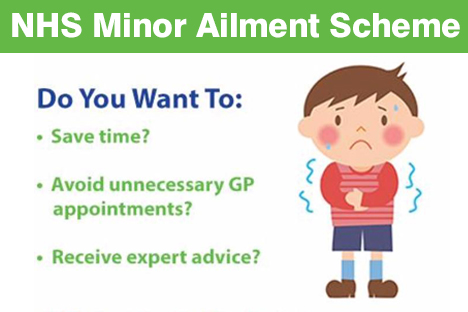
    The minor ailment scheme is an NHS service that allows the pharmacy to supply advice and medication where appropriate by the pharmacy for a group of minor conditions.

    The service is free of charge for eligible patients. The pharmacy team will ask you a few questions to establish if you qualify for this service.

    The aim of the service is to provide treatments for minor conditions without the need to see your GP or A&E. You don’t require an appointment for this service. You are required to be registered with a local GP in the same area as the pharmacy. If you are using this service for the first time, we will need to register you which can take 10-15 minutes. The pharmacist will ask a have a short consultation with you to establish the best course of treatment for you and to give you advice. In more serious cases, the pharmacist might refer you to the GP or the A&E as appropriate.

    Local GP surgeries or NHS 111 might also refer you to the pharmacy for this service. This service aims to increase utilisation of community pharmacist skills by providing self care through the pharmacy. It also increases patient choice, convenience and access to treatment for minor ailments that do not require consultation with a doctor.

    If you or someone you look after requires this service, please inquire at the pharmacy for the minor ailment scheme.

  • NHS Medicine Use Review Service

    NHS Medicine Use Review Service

    Meet with our pharmacist to talk about:

    • The medicines you are taking
    • What they do
    • How well they work for you
    • How to get the most out of them

    What is a Medicines Use Review (MUR)

    A medicines use review is an appointment with one of our pharmacists to focus on how you are getting on with your medicines. It is an NHS service and you don’t need to pay for it.

    The meeting is to:

    • Help you find out more about the medicines you are taking
    • Pick up any problems you are having with your medicines
    • Improve the effectiveness of your medicines. There may be easier ways to take them, or you may find you need fewer medicines than before.
    • Get better value for the NHS- making sure that your medicines are right for you prevents unnecessary waste.

    Our pharmacist will have questions to ask you, and may suggest changes to your medicines. You may have concerns or questions that you want to ask. You can ask anything at all about your medicines.

    Remember you can ask our pharmacist questions at any time, but a review will give you and us both more time to concentrate on you and your medicines.

    How you may be offered a review: 

    Our pharmacist might invite you for a review either in person or in a letter through the post.

    You can also ask our pharmacist for a review. You must have been getting your prescriptions from us for three months or more.

    Is a medicines use review for you?

    You can ask for a medicines use review if:

    • You are regularly taking more than one prescription medicine
    • You are taking medicines for a long term illness (like asthma, arthritis, diabetes or epilepsy)

    Our pharmacist will be happy to arrange a review meeting, and may even suggest it. Your doctor or nurse might also suggest that a review would be helpful.

    Even if you are not in either of these groups, you can ask our pharmacist for advice at any time.

    If there is an urgent problem with medicines, don’t wait for a medicines use review. If you or somebody else, notice one of the things on this list, don’t delay:

    •  If you have taken too much of any medicine
    •  If you have an allergic reaction to a new medicine (such as wheezing, rash, swelling or fainting)
    •  If you notice a serious side effect or any unusual symptoms
    •  If you notice your health getting worseIn any of these cases, talk to a doctor or pharmacist straight away.

    What you can expect in the review meeting

    Our pharmacists have undergone special training and have been assessed to make sure they have the right knowledge and skills to provide this service.

    The meeting is confidential.

    •  We have private consultation rooms in our pharmacies where you sit down together with the pharmacist and can’t be overheard by customers or staff.
    •  Your details and your discussion will be kept private. You can talk openly and your questions or worries will be listened to. Only you and your GP will normally receive a record of the meeting.

    Our pharmacist will listen and help.

    •  We will be ready to hear your concerns and your questions. You can be open with us and say whatever you want in these meetings.
    • Our pharmacists will only know about medicines that you have received from our pharmacy. We will not have a record of prescriptions you may have picked up from another pharmacy. We will not have your medical history or details about your illness. So it’s important to tell us as much as you can.

    What happens afterwards?

    • Everything may be okay with your medicines and nothing else will need to happen.
    • You will be given an Action Plan which will include any changes you have agreed in the way you take your medicines. This will be filled in by our pharmacist during the review.
    • A copy of the Action Plan will go to your doctor and be kept with your medical notes.
    • Our pharmacist may recommend a change to your prescription. You will have a note of this in the Action Plan. Both you and your doctor will need to agree on any changes to your prescription, so you may be asked to make an appointment with your doctor to discuss these. No changes will be made against your will.

    Questions you may want to ask

    These are just suggestions. You can ask us any questions you like about your medicines.

    • What does this medicine do?
    • Why is it important that I take this medicine?
    • Are there any other treatment options?
    • When and how should I take it?
    • How long should I take it for?
    • What other medicines, drinks, foods or activities should I be aware of when I am taking this medicine?
    • What should I do if I don’t feel well while taking it?
    • How do I know it’s helping?
    • How can I be sure it’s safe for me to take?
    • What are the possible risks and side effects?
    • What should I do if I get one of these effects?
    • Could another medicine do a better job, with less risk?
    • What if I stopped taking it, or took a lower dose?
    • Will the medicine build up in my body?
    • Do I really need to take these medicines?
    • Is there anything that can help to remind me to take my medicines?
    • Can I have containers that are easier to open?
    • Could you provide the patient information leaflet in larger print?
    • Where can I go for more information?

    Please do not hesitate to contact us if you require any more information on the Medicines Use Review service, or please see our health advice page for further information.