Blog

  • Altitude Sickness

    Altitude Sickness

    You can get altitude sickness if you travel to a high altitude too quickly.

    Breathing becomes difficult because you’re not able to take in as much oxygen.

    Altitude sickness, also called acute mountain sickness (AMS), can become a medical emergency if ignored.

    Your age, sex or physical fitness do not affect your likelihood of getting altitude sickness.

    Also, just because you may not have had it before, this does not mean you will not get it on another trip.

    Symptoms of altitude sickness

    Symptoms of altitude sickness usually develop between 6 and 24 hours after reaching altitudes more than 2,500m above sea level.

    Symptoms are similar to those of a bad hangover and include:

    • headache
    • feeling and being sick
    • dizziness
    • tiredness
    • loss of appetite
    • shortness of breath

    The symptoms are usually worse at night.

    Altitude sickness does not only affect mountain climbers. Tourists travelling to cities that are 2,500m above sea level or higher, such as La Paz in Bolivia or Bogotá in Colombia, can also get altitude sickness.

    It’s not possible to get altitude sickness in the UK because the highest mountain, Ben Nevis in Scotland, is only 1,345m.

    Preventing altitude sickness

    The best way to prevent getting altitude sickness is to travel to altitudes above 2,500m slowly.

    It usually takes a few days for your body to get used to a change in altitude.

    You should also:

    • avoid flying directly to areas of high altitude, if possible
    • take 2 to 3 days to get used to high altitudes before going above 2,500m
    • avoid climbing more than 300m to 500m a day
    • have a rest day every 600m to 900m you go up, or rest every 3 to 4 days
    • make sure you’re drinking enough water
    • avoid smoking and alcohol
    • avoid strenuous exercise for the first 24 hours
    • eat a light but high-calorie diet

    Medicines

    Consider travelling with these medicines for altitude sickness:

    • acetazolamide to prevent and treat high-altitude sickness
    • ibuprofen and paracetamol for headaches
    • anti-sickness medicine, such as promethazine, for nausea

    In the UK, acetazolamide is not licensed to treat altitude sickness. But it’s available from most travel clinics and some GPs may prescribe it.

    Promethazine is available from pharmacies. You do not need a prescription to buy it.

    Begin taking acetazolamide 1 to 2 days before you start to go up in altitude and continue to take it while going up.

    You should still go up gradually and follow the prevention advice, including taking time to acclimatise, having regular rest days and drinking plenty of water.

    If you get symptoms of altitude sickness while taking acetazolamide, rest or go down until you feel better before going up again.

    Treating altitude sickness

    If you think you have altitude sickness:

    • stop and rest where you are
    • do not go any higher for at least 24 to 48 hours
    • if you have a headache, take ibuprofen or paracetamol
    • if you feel sick, take an anti-sickness medicine, such as promethazine
    • make sure you’re drinking enough water
    • do not smoke, drink alcohol, or exercise

    Acetazolamide can be used to reduce the severity of your symptoms, but it will not completely get rid of them.

    Tell your travel companions how you feel, even if your symptoms are mild – there’s a danger your judgement may not be clear.

    You can continue going up with care once you feel you have fully recovered.

    If you do not feel any better after 24 hours, go down by at least 500m (about 1,600 feet).

    Do not attempt to climb again until your symptoms have completely disappeared.

    After 2 to 3 days, your body should have adjusted to the altitude and your symptoms should disappear.

    See a doctor if your symptoms do not improve or get worse.

    Complications

    If the symptoms of altitude sickness are ignored, they can lead to life-threatening conditions affecting the brain or lungs.

    High altitude cerebral oedema (HACE)

    High altitude cerebral oedema (HACE) is swelling of the brain caused by a lack of oxygen.

    Symptoms of HACE include:

    • headache
    • weakness
    • feeling and being sick
    • loss of coordination
    • feeling confused
    • hallucinations (seeing and hearing things that are not there)

    A person with HACE will often not realise they’re ill. They may insist they’re OK and want to be left alone.

    HACE can develop quickly over a few hours. It can be fatal if it’s not treated immediately.

    Treating HACE:

    • move down to a lower altitude immediately
    • take dexamethasone
    • give bottled oxygen, if available

    Dexamethasone is a steroid medicine that reduces swelling of the brain. It’s often carried by professional mountain climbers as part of their medical supplies.

    If you cannot go down immediately, dexamethasone can help relieve symptoms until it’s safe to do so.

    You should go to hospital as soon as possible for follow-up treatment.

    High altitude pulmonary oedema (HAPE)

    High altitude pulmonary oedema (HAPE) is a build-up of fluid in the lungs.

    Symptoms of HAPE:

    • blue tinge to the skin or lips (cyanosis)
    • breathing difficulties, even when resting
    • tightness in the chest
    • a persistent cough, bringing up pink or white frothy liquid (sputum)
    • tiredness and weakness

    The symptoms of HAPE can start to appear a few days after arrival at high altitude. It can be fatal if it’s not treated immediately.

    Treating HAPE:

    • move down to a lower altitude immediately
    • take nifedipine
    • give bottled oxygen, if available

    Nifedipine is a medicine that helps to reduce chest tightness and make breathing easier. It’s also often part of an expedition’s medical supplies

    You should go to hospital as soon as possible for follow-up treatment.

    If you’ve had HAPE, you can register with the International HAPE Database to help develop new treatments for the condition.

  • Allergies

    Allergies

    An allergy is a reaction the body has to a particular food or substance.

    Allergies are very common. They’re thought to affect more than 1 in 4 people in the UK at some point in their lives.

    They’re particularly common in children. Some allergies go away as a child gets older, although many are lifelong.

    Adults can develop allergies to things they were not previously allergic to.

    Having an allergy can be a nuisance and affect your everyday activities, but most allergic reactions are mild and can be largely kept under control.

    Severe reactions can occasionally occur, but these are uncommon.

    Common allergies

    Substances that cause allergic reactions are called allergens.

    The more common allergens include:

    • grass and tree pollen – an allergy to these is known as hay fever (allergic rhinitis)
    • dust mites
    • animal dander, tiny flakes of skin or hair
    • food – particularly nuts, fruit, shellfish, eggs and cows’ milk
    • insect bites and stings
    • medicines – including ibuprofen, aspirin and certain antibiotics
    • latex – used to make some gloves and condoms
    • mould – these can release small particles into the air that you can breathe in
    • household chemicals – including those in detergents and hair dyes

    Most of these allergens are generally harmless to people who are not allergic to them.

    Symptoms of an allergic reaction

    Allergic reactions usually happen quickly within a few minutes of exposure to an allergen.

    They can cause:

    • sneezing
    • a runny or blocked nose
    • red, itchy, watery eyes
    • wheezing and coughing
    • a red, itchy rash
    • worsening of asthma or eczema symptoms

    Most allergic reactions are mild, but occasionally a severe reaction called anaphylaxis or anaphylactic shock can occur.

    This is a medical emergency and needs urgent treatment.

    Getting help for allergies

    See a GP if you think you or your child might have had an allergic reaction to something.

    The symptoms of an allergic reaction can also be caused by other conditions.

    A GP can help determine whether it’s likely you have an allergy.

    If they think you might have a mild allergy, they can offer advice and treatment to help manage the condition.

    If your allergy is particularly severe or it’s not clear what you’re allergic to, they may refer you to an allergy specialist for testing and advice about treatment.

    Find out more about allergy testing

    How to manage an allergy

    In many cases, the most effective way of managing an allergy is to avoid the allergen that causes the reaction whenever possible.

    For example, if you have a food allergy, you should check a food’s ingredients list for allergens before eating it.

    There are also several medicines available to help control symptoms of allergic reactions, including:

    • antihistamines – these can be taken when you notice the symptoms of a reaction, or before being exposed to an allergen, to stop a reaction occurring
    • decongestants – tablets, capsules, nasal sprays or liquids that can be used as a short-term treatment for a blocked nose
    • lotions and creams, such as moisturising creams (emollients) – these can reduce skin redness and itchiness
    • steroid medicines – sprays, drops, creams, inhalers and tablets that can help reduce redness and swelling caused by an allergic reaction

    For some people with very severe allergies, a treatment called immunotherapy may be recommended.

    This involves being exposed to the allergen in a controlled way over a number of years so your body gets used to it and does not react to it so severely.

    What causes allergies?

    Allergies occur when the body’s immune system reacts to a particular substance as though it’s harmful.

    It’s not clear why this happens, but most people affected have a family history of allergies or have closely related conditions, such as asthma or eczema.

    The number of people with allergies is increasing every year.

    The reasons for this are not understood, but 1 of the main theories is it’s the result of living in a cleaner, germ-free environment, which reduces the number of germs our immune system has to deal with.

    It’s thought this may cause it to overreact when it comes into contact with harmless substances.

    Is it an allergy, sensitivity or intolerance?

    Allergy

    A reaction produced by the body’s immune system when exposed to a normally harmless substance.

    Sensitivity

    The exaggeration of the normal effects of a substance. For example, the caffeine in a cup of coffee may cause extreme symptoms, such as palpitations and trembling.

    Intolerance

    Where a substance causes unpleasant symptoms, such as diarrhoea, but does not involve the immune system.

    People with an intolerance to certain foods can typically eat a small amount without having any problems.

    Symptoms of an allergic reaction usually develop within a few minutes of being exposed to something you’re allergic to, although occasionally they can develop gradually over a few hours.

    Although allergic reactions can be a nuisance and hamper your normal activities, most are mild.

    Very occasionally, a severe reaction called anaphylaxis can occur.

    Main allergy symptoms

    Common symptoms of an allergic reaction include:

    • sneezing and an itchy, runny or blocked nose (allergic rhinitis)
    • itchy, red, watering eyes (conjunctivitis)
    • wheezing, chest tightness, shortness of breath and a cough
    • a raised, itchy, red rash (hives)
    • swollen lips, tongue, eyes or face
    • tummy pain, feeling sick, vomiting or diarrhoea
    • dry, red and cracked skin

    Itchy, red, watering eyes

    Raised, itchy, red rash (hives)

    The symptoms vary depending on what you’re allergic to and how you come into contact with it.

    For example, you may have a runny nose if exposed to pollen, develop a rash if you have a skin allergy, or feel sick if you eat something you’re allergic to.

    See your GP if you or your child might have had an allergic reaction to something. They can help determine whether the symptoms are caused by an allergy or another condition.

    Read more about diagnosing allergies.

    Severe allergic reaction (anaphylaxis)

    In rare cases, an allergy can lead to a severe allergic reaction, called anaphylaxis or anaphylactic shock, which can be life threatening.

    This affects the whole body and usually develops within minutes of exposure to something you’re allergic to.

    Signs of anaphylaxis include any of the symptoms above, as well as:

    • swelling of the throat and mouth
    • difficulty breathing
    • lightheadedness
    • confusion
    • blue skin or lips
    • collapsing and losing consciousness

    Anaphylaxis is a medical emergency that requires immediate treatment.

    Read more about anaphylaxis for information about what to do if it occurs.

    If you think you have an allergy, tell your GP about the symptoms you’re having, when they happen, how often they occur and if anything seems to trigger them.

    Your GP can offer advice and treatment for mild allergies with a clear cause.

    If your allergy is more severe or it’s not obvious what you’re allergic to, you may be referred for allergy testing at a specialist allergy clinic.

    Find your nearest NHS allergy clinic

    The tests that may be carried out are described on this page.

    Skin prick testing

    Skin prick testing is one of the most common allergy tests.

    It involves putting a drop of liquid onto your forearm that contains a substance you may be allergic to. The skin under the drop is then gently pricked.

    If you’re allergic to the substance, an itchy, red bump will appear within 15 minutes.

    Most people find skin prick testing not particularly painful, but it can be a little uncomfortable. It’s also very safe.

    Make sure you do not take antihistamines before the test, as they can interfere with the results.

    Blood tests

    Blood tests may be used instead of, or alongside, skin prick tests to help diagnose common allergies.

    A sample of your blood is removed and analysed for specific antibodies produced by your immune system in response to an allergen.

    Patch tests

    Patch tests are used to investigate a type of eczema known as contact dermatitis, which can be caused by your skin being exposed to an allergen.

    A small amount of the suspected allergen is added to special metal discs, which are then taped to your skin for 48 hours and monitored for a reaction.

    Elimination diet

    If you have a suspected food allergy, you may be advised to avoid eating a particular food to see if your symptoms improve.

    After a few weeks, you may then be asked to eat the food again to check if you have another reaction.

    Do not attempt to do this yourself without discussing it with a qualified healthcare professional.

    Challenge testing

    In a few cases, a test called a food challenge may also be used to diagnose a food allergy.

    During the test, you’re given the food you think you’re allergic to in gradually increasing amounts to see how you react under close supervision.

    This test is riskier than other forms of testing, as it could cause a severe reaction, but is the most accurate way to diagnose food allergies.

    And challenge testing is always carried out in a clinic where a severe reaction can be treated if it does develop.

    Allergy testing kits

    The use of commercial allergy-testing kits isn’t recommended.

    These tests are often of a lower standard than those provided by the NHS or accredited private clinics, and are generally considered to be unreliable.

    Allergy tests should be interpreted by a qualified professional who has detailed knowledge of your symptoms and medical history.

    The treatment for an allergy depends on what you’re allergic to. In many cases, a GP will be able to offer advice and treatment.

    They’ll advise you about taking steps to avoid exposure to the substance you’re allergic to, and can recommend medicines to control your symptoms.

    Avoiding exposure to allergens

    The best way to keep your symptoms under control is often to avoid the things you’re allergic to, although this is not always practical.

    For example, you may be able to help manage:

    • food allergies by being careful about what you eat
    • animal allergies by keeping pets outside as much as possible and washing them regularly
    • mould allergies by keeping your home dry and well-ventilated, and dealing with any damp and condensation
    • hay fever by staying indoors and avoiding grassy areas when the pollen count is high
    • dust mite allergies by using allergy-proof duvets and pillows, and fitting wooden floors rather than carpets

    Allergy medicines

    Medicines for mild allergies are available from pharmacies without a prescription.

    But always ask a pharmacist or GP for advice before starting any new medicine, as they’re not suitable for everyone.

    Antihistamines

    Antihistamines are the main medicines for allergies.

    They can be used:

    • as and when you notice the symptoms of an allergic reaction
    • to prevent allergic reactions – for example, you may take them in the morning if you have hay fever and you know the pollen count is high that day

    Antihistamines can be taken as tablets, capsules, creams, liquids, eye drops or nasal sprays, depending on which part of your body is affected by your allergy.

    Decongestants

    Decongestants can be used as a short-term treatment for a blocked nose caused by an allergic reaction.

    They can be taken as tablets, capsules, nasal sprays or liquids.

    Do not use them for more than a week at a time, as using them for long periods can make your symptoms worse.

    Lotions and creams

    Red and itchy skin caused by an allergic reaction can sometimes be treated with over-the-counter creams and lotions, such as:

    • moisturising creams (emollients) to keep the skin moist and protect it from allergens
    • calamine lotion to reduce itchiness
    • steroids to reduce inflammation

    Steroids

    Steroid medicines can help reduce inflammation caused by an allergic reaction.

    They’re available as:

    • nasal sprays and eye drops for an inflamed nose and eyes
    • creams for eczema and contact dermatitis
    • inhalers for asthma
    • tablets for hives (urticaria)

    Sprays, drops and weak steroid creams are available without a prescription.

    Stronger creams, inhalers and tablets are available on prescription from a GP.

    Immunotherapy (desensitisation) 

    Immunotherapy may be an option for a small number of people with certain severe and persistent allergies who are unable to control their symptoms using the measures above.

    The treatment involves being given occasional small doses of the allergen, either as an injection, or as drops or tablets under the tongue, over the course of several years.

    The injection can only be performed in a specialist clinic under the supervision of a doctor, as there’s a small risk of a severe reaction.

    The drops or tablets can usually be taken at home.

    The aim of treatment is to help your body get used to the allergen so it does not react to it so severely.

    This will not necessarily cure your allergy, but it’ll make it milder and mean you can take less medicine.

    Treating severe allergic reactions (anaphylaxis)

    Some people with severe allergies may experience life-threatening reactions, known as anaphylaxis or anaphylactic shock.

    If you’re at risk of this, you’ll be given special injectors containing a medicine called adrenaline to use in an emergency.

    If you develop symptoms of anaphylaxis, such as difficulty breathing, you should inject yourself in the outer thigh before seeking emergency medical help.

    Treating specific allergic conditions

    Use the links below to find information about how specific allergies and related conditions are treated:

    • hay fever
    • food allergies
    • allergic rhinitis
    • conjunctivitis
    • hives (urticaria)
    • eczema
    • contact dermatitis
    • asthma
  • Acne

    Acne

    Acne is a common skin condition that affects most people at some point. It causes spots, oily skin and sometimes skin that’s hot or painful to touch.

    Symptoms of acne

    Acne most commonly develops on the:

    • face – this affects almost everyone with acne
    • back – this affects more than half of people with acne
    • chest – this affects about 15% of people with acne

    Types of spots

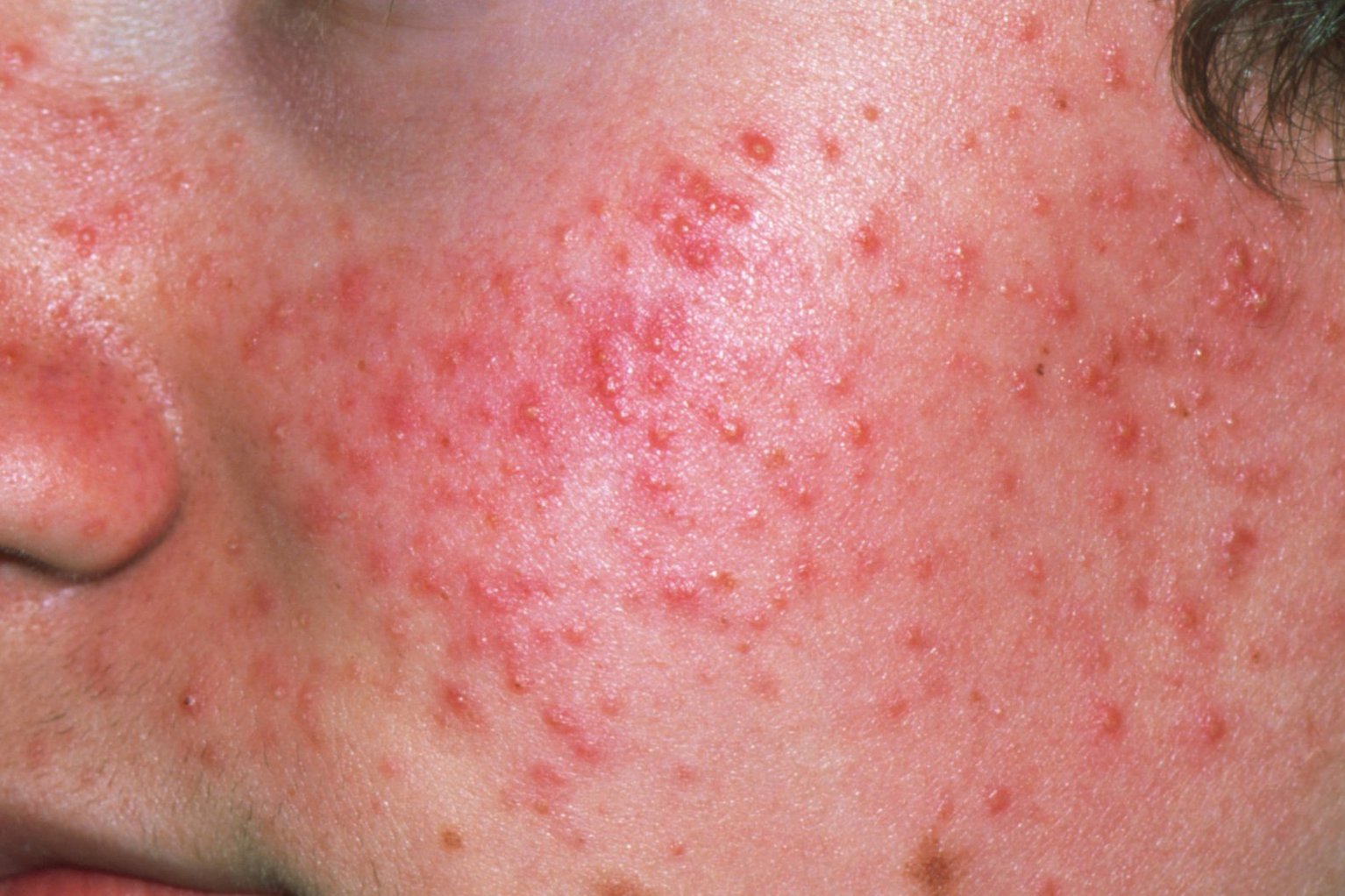
    There are 6 main types of spot caused by acne:

    • blackheads – small black or yellowish bumps that develop on the skin; they’re not filled with dirt, but are black because the inner lining of the hair follicle produces colour
    • whiteheads – have a similar appearance to blackheads, but may be firmer and will not empty when squeezed
    • papules – small red bumps that may feel tender or sore
    • pustules – similar to papules, but have a white tip in the centre, caused by a build-up of pus
    • nodules – large hard lumps that build up beneath the surface of the skin and can be painful
    • cysts – the most severe type of spot caused by acne; they’re large pus-filled lumps that look similar to boils and carry the greatest risk of causing permanent scarring

    Things you can try if you have acne

    These self-help techniques may be useful:

    • Do not wash affected areas of skin more than twice a day. Frequent washing can irritate the skin and make symptoms worse.
    • Wash the affected area with a mild soap or cleanser and lukewarm water. Very hot or cold water can make acne worse.
    • Do not try to “clean out” blackheads or squeeze spots. This can make them worse and cause permanent scarring.
    • Avoid using too much make-up and cosmetics. Use water-based products that are described as non-comedogenic. This means the product is less likely to block the pores in your skin.
    • Completely remove make-up before going to bed.
    • If dry skin is a problem, use a fragrance-free water-based emollient.
    • Regular exercise cannot improve your acne, but it can boost your mood and improve your self-esteem. Shower as soon as possible once you finish exercising as sweat can irritate your acne.
    • Wash your hair regularly and try to avoid letting your hair fall across your face.

    Although acne cannot be cured, it can be controlled with treatment.

    If you develop mild acne, it’s a good idea to speak to a pharmacist for advice.

    Several creams, lotions and gels for treating spots are available to buy from pharmacies.

    Products containing a low concentration of benzoyl peroxide may be recommended, but be careful as this can bleach clothing.

    If your acne is severe or appears on your chest and back, it may need to be treated with antibiotics or stronger creams that are only available on prescription.

    When to seek medical advice

    If you have mild acne, speak to a pharmacist about medicines to treat it.

    If these do not control your acne, or it’s making you feel very unhappy, see a GP.

    You should see a GP if you have moderate or severe acne or you develop nodules or cysts, as they need to be treated properly to avoid scarring.

    Try to resist the temptation to pick or squeeze the spots, as this can lead to permanent scarring.

    Treatments can take up to 3 months to work, so do not expect results overnight. Once they do start to work, the results are usually good.

    Why do I have acne?

    Acne is most commonly linked to the changes in hormone levels during puberty, but can start at any age.

    Certain hormones cause the grease-producing glands next to hair follicles in the skin to produce larger amounts of oil (abnormal sebum).

    This abnormal sebum changes the activity of a usually harmless skin bacterium called P. acnes, which becomes more aggressive and causes inflammation and pus.

    The hormones also thicken the inner lining of the hair follicle, causing blockage of the pores. Cleaning the skin does not help to remove this blockage.

    Other possible causes

    Acne is known to run in families. If both your mother and father had acne, it’s likely that you’ll also have acne.

    Hormonal changes, such as those that occur during the menstrual cycle or pregnancy, can also lead to episodes of acne in women.

    There’s no evidence that diet, poor hygiene or sexual activity play a role in acne.

    Who’s affected?

    Acne is very common in teenagers and younger adults. About 95% of people aged 11 to 30 are affected by acne to some extent.

    Acne is most common in girls from the ages of 14 to 17, and in boys from the ages of 16 to 19.

    Most people have acne on and off for several years before their symptoms start to improve as they get older.

    Acne often disappears when a person is in their mid-20s.

    In some cases, acne can continue into adult life. About 3% of adults have acne over the age of 35.

    Acne is caused when tiny holes in the skin, known as hair follicles, become blocked.

    Sebaceous glands are tiny glands found near the surface of your skin. The glands are attached to hair follicles, which are small holes in your skin that an individual hair grows out of.

    Sebaceous glands lubricate the hair and the skin to stop it drying out. They do this by producing an oily substance called sebum.

    In acne, the glands begin to produce too much sebum. The excess sebum mixes with dead skin cells and both substances form a plug in the follicle.

    If the plugged follicle is close to the surface of the skin, it bulges outwards, creating a whitehead. Alternatively, the plugged follicle can be open to the skin, creating a blackhead.

    Normally harmless bacteria that live on the skin can then contaminate and infect the plugged follicles, causing papules, pustules, nodules or cysts.

    Testosterone 

    Teenage acne is thought to be triggered by increased levels of a hormone called testosterone, which occurs during puberty. The hormone plays an important role in stimulating the growth and development of the penis and testicles in boys, and maintaining muscle and bone strength in girls.

    The sebaceous glands are particularly sensitive to hormones. It’s thought that increased levels of testosterone cause the glands to produce much more sebum than the skin needs.

    Acne in families

    Acne can run in families. If your parents had acne, it’s likely that you’ll also develop it.

    One study has found that if both your parents had acne, you’re more likely to get more severe acne at an early age. It also found that if one or both of your parents had adult acne, you’re more likely to get adult acne too.

    Acne in women

    Women are more likely to have adult acne than men. It’s thought that many cases of adult acne are caused by the changes in hormone levels that many women have at certain times.

    These times include:

    • periods – some women have a flare-up of acne just before their period
    • pregnancy – many women have symptoms of acne at this time, usually during the first 3 months of their pregnancy
    • polycystic ovary syndrome – a common condition that can cause acne, weight gain and the formation of small cysts inside the ovary

    Other triggers

    Other possible triggers of an acne flare-up include:

    • some cosmetic products – however, this is less common as most products are now tested, so they do not cause spots (non-comedogenic)
    • certain medications – such as steroid medicines, lithium (used to treat depression and bipolar disorder) and some drugs used to treat epilepsy
    • regularly wearing items that place pressure on an affected area of skin, such as a headband or backpack
    • smoking – which can contribute to acne in older people

    Acne myths

    Despite being one of the most widespread skin conditions, acne is also one of the most poorly understood. There are many myths and misconceptions about it:

    ‘Acne is caused by a poor diet’

    So far, research has not found any foods that cause acne. Eating a healthy, balanced diet is recommended because it’s good for your heart and your health in general.

    ‘Acne is caused by having dirty skin and poor hygiene’

    Most of the biological reactions that trigger acne occur beneath the skin, not on the surface, so the cleanliness of your skin has no effect on your acne. Washing your face more than twice a day could just aggravate your skin.

    ‘Squeezing blackheads, whiteheads and spots is the best way to get rid of acne’ 

    This could actually make symptoms worse and may leave you with scarring.

    ‘Sexual activity can influence acne’

    Having sex or masturbating will not make acne any better or worse.

    ‘Sunbathing, sunbeds and sunlamps help improve the symptoms of acne’

    There’s no conclusive evidence that prolonged exposure to sunlight or using sunbeds or sunlamps can improve acne. Many medicines used to treat acne can make your skin more sensitive to light, so exposure could cause painful damage to your skin, and also increase your risk of skin cancer.

    ‘Acne is infectious’

    You cannot pass acne on to other people.

    A GP can diagnose acne by looking at your skin. This involves examining your face, chest or back for the different types of spot, such as blackheads or sore, red nodules.

    How severe your acne is will determine where you should go for treatment and what treatment you should have.

    The severity of acne is often categorised as:

    • mild – mostly whiteheads and blackheads, with a few papules and pustules
    • moderate – more widespread whiteheads and blackheads, with many papules and pustules
    • severe – lots of large, painful papules, pustules, nodules or cysts; you might also have some scarring

    For mild acne, you should speak to a pharmacist for advice. For moderate or severe acne, speak to a GP.

    Acne in women

    If acne suddenly starts in adult women, it can be a sign of a hormonal imbalance, especially if it’s accompanied by other symptoms such as:

    • excessive body hair (hirsutism)
    • irregular or light periods

    The most common cause of hormonal imbalances in women is polycystic ovary syndrome (PCOS).

    PCOS can be diagnosed using a combination of ultrasound scans and blood tests.

    Treatment for acne depends on how severe it is. It can take several months of treatment before acne symptoms improve.

    If you just have a few blackheads, whiteheads and spots, a pharmacist should be able to advise you on how to treat them successfully with over-the-counter gels or creams (topical treatments) that contain benzoyl peroxide.

    Treatments from a GP

    See a GP if your acne is moderate or severe, or medicine from your pharmacy has not worked, as you probably need prescription medicine.

    Prescription medicines that can be used to treat acne include:

    • topical retinoids
    • topical antibiotics
    • azelaic acid
    • antibiotic tablets
    • in women, the combined oral contraceptive pill

    If you have severe acne, your GP can refer you to an expert in treating skin conditions (dermatologist).

    For example, if you have:

    • a large number of papules and pustules on your chest and back, as well as your face
    • painful nodules
    • scarring, or are at risk of scarring

    A combination of antibiotic tablets and topical treatments is usually the first treatment option for severe acne.

    Hormonal therapies or the combined oral contraceptive pill can also be effective in women who have acne.

    But the progestogen-only pill or contraceptive implant can sometimes make acne worse.

    Many of these treatments can take 2 to 3 months before they start to work.

    It’s important to be patient and persist with a recommended treatment, even if there’s no immediate effect.

    Topical treatments (gels, creams and lotions)

    Benzoyl peroxide

    Benzoyl peroxide works as an antiseptic to reduce the number of bacteria on the surface of the skin.

    It also helps to reduce the number of whiteheads and blackheads, and has an anti-inflammatory effect.

    Benzoyl peroxide is usually available as a cream or gel. It’s used either once or twice a day.

    It should be applied 20 minutes after washing to all of the parts of your face affected by acne.

    It should be used sparingly, as too much can irritate your skin.

    It also makes your face more sensitive to sunlight, so avoid too much sun and sources of ultraviolet (UV) light (such as sunbeds), or wear sun cream.

    Benzoyl peroxide can have a bleaching effect, so avoid getting it on your hair or clothes.

    Common side effects of benzoyl peroxide include:

    • dry and tense skin
    • a burning, itching or stinging sensation
    • some redness and peeling of the skin

    Side effects are usually mild and should pass once the treatment has finished.

    Most people need a 6-week course of treatment to clear most or all of their acne.

    You may be advised to continue treatment less frequently to prevent acne returning.

    Topical retinoids

    Topical retinoids work by removing dead skin cells from the surface of the skin (exfoliating), which helps prevent them building up within hair follicles.

    Tretinoin and adapalene are topical retinoids used to treat acne. They’re available in a gel or cream and are usually applied once a day before you go to bed.

    Apply to all the parts of your face affected by acne 20 minutes after washing your face.

    It’s important to apply topical retinoids sparingly and avoid excessive exposure to sunlight and UV.

    Topical retinoids are not suitable for use during pregnancy, as there’s a risk they might cause birth defects.

    The most common side effects of topical retinoids are mild irritation and stinging of the skin.

    A 6-week course is usually required, but you may be advised to continue using the medicine less frequently after this.

    Topical antibiotics

    Topical antibiotics help kill the bacteria on the skin that can infect plugged hair follicles. They’re available as a lotion or gel that’s applied once or twice a day.

    A 6- to 8-week course is usually recommended. After this, treatment is usually stopped, as there’s a risk that the bacteria on your face could become resistant to the antibiotics.

    This could make your acne worse and cause additional infections.

    Side effects are uncommon, but can include:

    • minor irritation of the skin
    • redness and burning of the skin
    • peeling of the skin

    Azelaic acid

    Azelaic acid is often used as an alternative treatment for acne if the side effects of benzoyl peroxide or topical retinoids are particularly irritating or painful.

    Azelaic acid works by getting rid of dead skin and killing bacteria.

    It’s available as a cream or gel and is usually applied twice a day (or once a day if your skin is particularly sensitive).

    The medicine does not make your skin sensitive to sunlight, so you do not have to avoid exposure to the sun.

    You’ll usually need to use azelaic acid for a month before your acne improves.

    The side effects of azelaic acid are usually mild and include:

    • burning or stinging skin
    • itchiness
    • dry skin
    • redness of the skin

    Antibiotic tablets

    Antibiotic tablets (oral antibiotics) are usually used in combination with a topical treatment to treat more severe acne.

    In most cases, a class of antibiotics called tetracyclines is prescribed, unless you’re pregnant or breastfeeding.

    Pregnant or breastfeeding women are usually advised to take an antibiotic called erythromycin, which is known to be safer to use.

    It usually takes about 6 weeks before you notice an improvement in your acne.

    Depending on how well you react to the treatment, a course of oral antibiotics can last 4 to 6 months.

    Tetracyclines can make your skin sensitive to sunlight and UV light, and can also make the oral contraceptive pill less effective during the first few weeks of treatment.

    You’ll need to use an alternative method of contraception, such as condoms, during this time.

    Hormonal therapies

    Hormonal therapies can often benefit women with acne, especially if the acne flares up around periods or is associated with hormonal conditions such as polycystic ovary syndrome.

    If you do not already use it, a GP may recommend the combined oral contraceptive pill, even if you’re not sexually active.

    This combined pill can often help improve acne in women, but may take up to a year before the full benefits are seen.

    Co-cyprindiol

    Co-cyprindiol is a hormonal treatment that can be used for more severe acne that does not respond to antibiotics. It helps to reduce the production of sebum.

    You’ll probably have to use co-cyprindiol for 2 to 6 months before you notice a significant improvement in your acne.

    There’s a small risk that women taking co-cyprindiol may develop breast cancer in later life.

    For example, out of a group of 10,000 women who have not taken co-cyprindiol, you’d expect 16 of them to develop breast cancer by the time they were 35.

    This figure rises to 17 or 18 for women who were treated with co-cyprindiol for at least 5 years in their early 20s.

    There’s also a very small chance of co-cyprindiol causing a blood clot. The risk is estimated to be around 1 in 2,500 in any given year.

    It’s not thought to be safe to take co-cyprindiol if you’re pregnant or breastfeeding. Women may need to have a pregnancy test before treatment can begin.

    Other side effects of co-cyprindiol include:

    • bleeding and spotting between your periods, which can sometimes occur for the first few months
    • headaches
    • sore breasts
    • mood changes
    • loss of interest in sex
    • weight gain or weight loss

    Isotretinoin

    Isotretinoin is a treatment for severe acne that comes in capsules. It has a number of beneficial effects:

    • it helps normalise sebum and reduce how much is produced
    • it helps prevent follicles becoming clogged
    • it decreases the amount of bacteria on the skin
    • it reduces redness and swelling in and around spots

    But the drug can also cause a wide range of side effects. It’s only recommended for severe cases of acne that have not responded to other treatments.

    Because of the risk of side effects, isotretinoin can only be prescribed by a specialist doctor.

    Read all about isotretinoin, including who can take it, side effects and the risks in pregnancy.

    Non-pharmaceutical treatments

    Several treatments for acne do not involve medicine.

    These include:

    • comedone extractor – a small pen-shaped instrument that can be used to clean out blackheads and whiteheads
    • chemical peels – where a chemical solution is applied to the face, causing the skin to peel off and new skin to replace it
    • photodynamic therapy – where light is applied to the skin in an attempt to improve symptoms of acne

    But these treatments may not work and cannot be routinely recommended.

    Acne and toothpaste

    A claim found on many websites is that toothpaste can dry up individual spots.

    While toothpaste does contain antibacterial substances, it also contains substances that can irritate and damage your skin.

    Using toothpaste in this way is not recommended. There are far more effective and safer treatments available from pharmacists or GPs.
  • Acid Reflux

    Acid Reflux

    Heartburn is a burning feeling in the chest caused by stomach acid travelling up towards the throat (acid reflux). If it keeps happening, it’s called gastro-oesophageal reflux disease (GORD).

    Check if you have acid reflux

    The main symptoms of acid reflux are:

    • heartburn – a burning sensation in the middle of your chest
    • an unpleasant sour taste in your mouth, caused by stomach acid

    You may also have:

    • a cough or hiccups that keep coming back
    • a hoarse voice
    • bad breath
    • bloating and feeling sick

    Your symptoms will probably be worse after eating, when lying down and when bending over.

    Causes of heartburn and acid reflux

    Lots of people get heartburn from time to time. There’s often no obvious reason why.

    Sometimes it’s caused or made worse by:

    • certain food and drink – such as coffee, alcohol, chocolate and fatty or spicy foods
    • being overweight
    • smoking
    • pregnancy
    • stress and anxiety
    • some medicines, such as anti-inflammatory painkillers (like ibuprofen)
    • a hiatus hernia – when part of your stomach moves up into your chest

    How you can ease heartburn and acid reflux yourself

    Simple lifestyle changes can help stop or reduce heartburn.

    Do

    • eat smaller, more frequent meals
    • raise 1 end of your bed 10 to 20cm by putting something under your bed or mattress – make it so your chest and head are above the level of your waist, so stomach acid does not travel up towards your throat
    • try to lose weight if you’re overweight
    • try to find ways to relax

    Don’t

    • do not have food or drink that triggers your symptoms
    • do not eat within 3 or 4 hours before bed
    • do not wear clothes that are tight around your waist
    • do not smoke
    • do not drink too much alcohol
    • do not stop taking any prescribed medicine without speaking to a doctor first

    A pharmacist can help with heartburn and acid reflux

    Speak to a pharmacist for advice if you keep getting heartburn.

    They can recommend medicines called antacids that can help ease your symptoms.

    It’s best to take these with food or soon after eating, as this is when you’re most likely to get heartburn. They may also work for longer if taken with food.

    Find a pharmacy

    Non-urgent advice:

    See a GP if:

    • lifestyle changes and pharmacy medicines are not helping
    • you have heartburn most days for 3 weeks or more
    • you have other symptoms, like food getting stuck in your throat, frequently being sick or losing weight for no reason

    A GP can provide stronger treatments and help rule out any more serious possible causes of your symptoms.

    Information:

    Coronavirus update: how to contact a GP

    It’s still important to get help from a GP if you need it. To contact your GP surgery:

    • visit their website
    • use the NHS App
    • call them

    Find out how to get medical help from home.

    Treatment from a GP

    To ease symptoms of acid reflux, a GP may prescribe medicine that reduces how much acid your stomach makes, such as:

    • omeprazole
    • lansoprazole

    You may be prescribed 1 of these medicines for a month or 2 to see if your symptoms stop.

    Important

    Go back to your GP if your symptoms come back after stopping your medicine. You may need a long-term prescription.

    Tests and surgery for heartburn and acid reflux

    If medicines do not help or your symptoms are severe, a GP may refer you to a specialist for:

    • tests to find out what’s causing your symptoms, such as a gastroscopy (where a thin tube with a camera is passed down your throat)
    • an operation to stop acid reflux – called a laparoscopic fundoplication